Voice
Practical, exercise-based therapy for adults whose voice has become hoarse, weak, strained, or unreliable — so it works for the life you actually live.
Your voice is how you connect, work, lead, teach, sing, and make yourself heard. When it stops doing what you need it to do — whether that’s getting through a busy work day, projecting in a meeting, or simply being heard on the phone — it can affect almost every part of your life.
You don’t have to just live with it. Voice therapy is active, evidence-based, and often relatively short-term — with lasting results.
Signs Your Voice May Need Help
What We Treat
Voice therapy supports adults with a wide range of conditions, including:
Vocal Nodules, Polyps, and Cysts
Often the result of vocal overuse or misuse — common in heavy voice users.
Muscle Tension Dysphonia
When the voice 'tightens up' without a structural cause — very common, and very treatable.
Vocal Fold Paralysis or Dysfunction
Following surgery, illness, or nerve damage affecting voice production.
Post-Surgical Voice Changes
Voice changes after thyroid surgery, neck surgery, or any procedure involving intubation.
Age-Related Voice Changes
When the voice becomes thin, weak, or breathy with age (presbylaryngis).
Recurrent or Persistent Hoarseness
Laryngitis or hoarseness that won't resolve, or keeps coming back.
Functional Voice Loss
Losing your voice with no clear physical cause — often stress-related.
Neurological Voice Changes
Voice changes related to Parkinson's, stroke, MS, and other neurological conditions.
What Voice Therapy Involves
Assessment
I start by listening to and analysing your voice quality, pitch, loudness, and endurance, and understanding what your voice needs to do for your work and daily life. I often work alongside an ENT specialist who has examined the vocal folds, so we can build a complete picture of what’s going on.
Therapy
Voice therapy is exercise-based, not just “rest your voice.” Most people see noticeable change within a few weeks. A typical course runs 4–8 sessions, with short daily exercises (5–10 minutes) between visits.
Professional Voice Users and Performance Coaching
For teachers, lecturers, performers, lawyers, and others whose voice is their livelihood, I combine voice therapy with Communication & Performance Coaching to build a voice that is not only healthy and reliable, but also confident, expressive, and engaging.
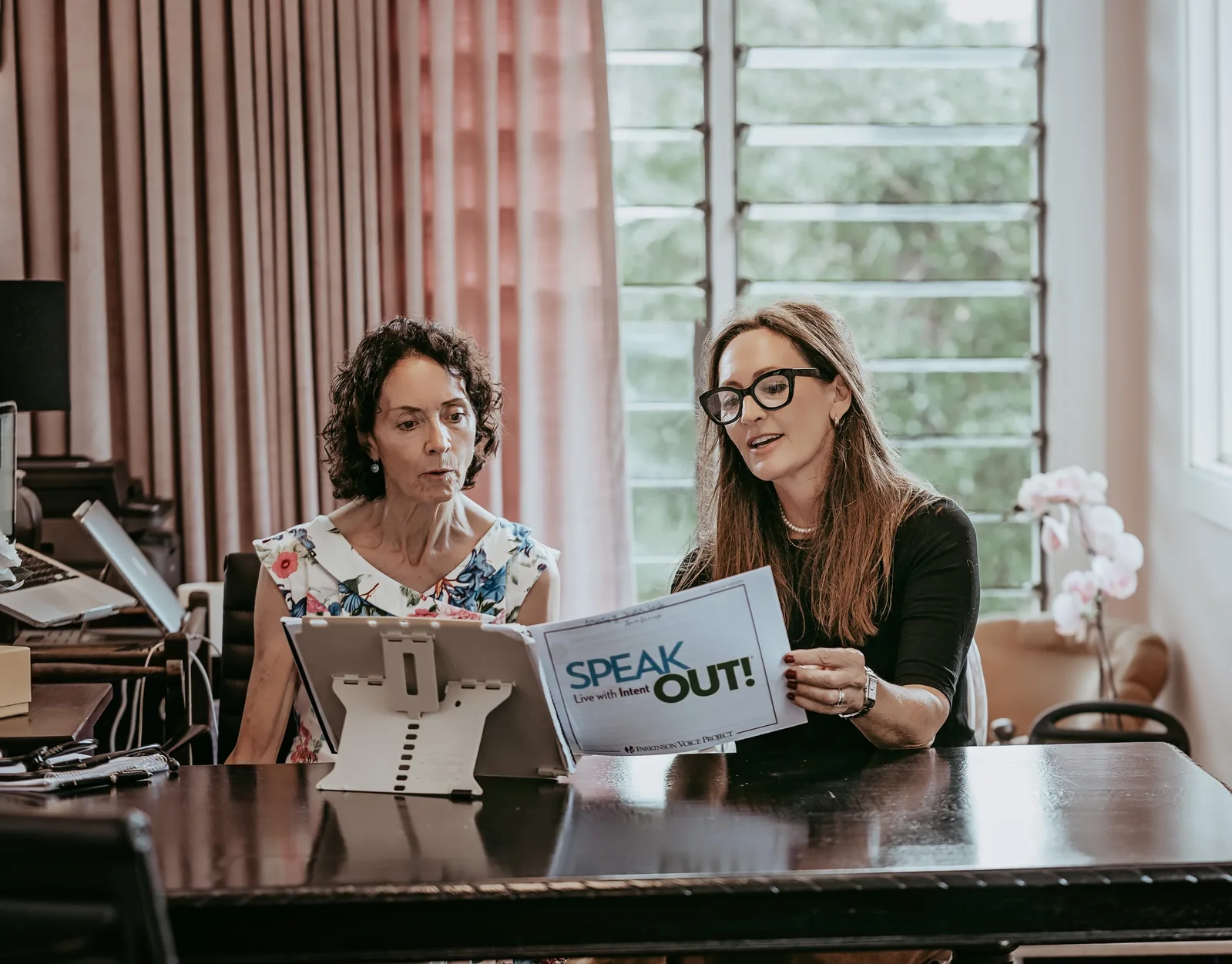
For voice changes related to Parkinson’s disease specifically, I’m a Certified SPEAK OUT!® Provider, delivering the SPEAK OUT!® program.
Voice not what it used to be?
Whether you've lost your voice, strained it, or want to protect it for the long haul — I can help.