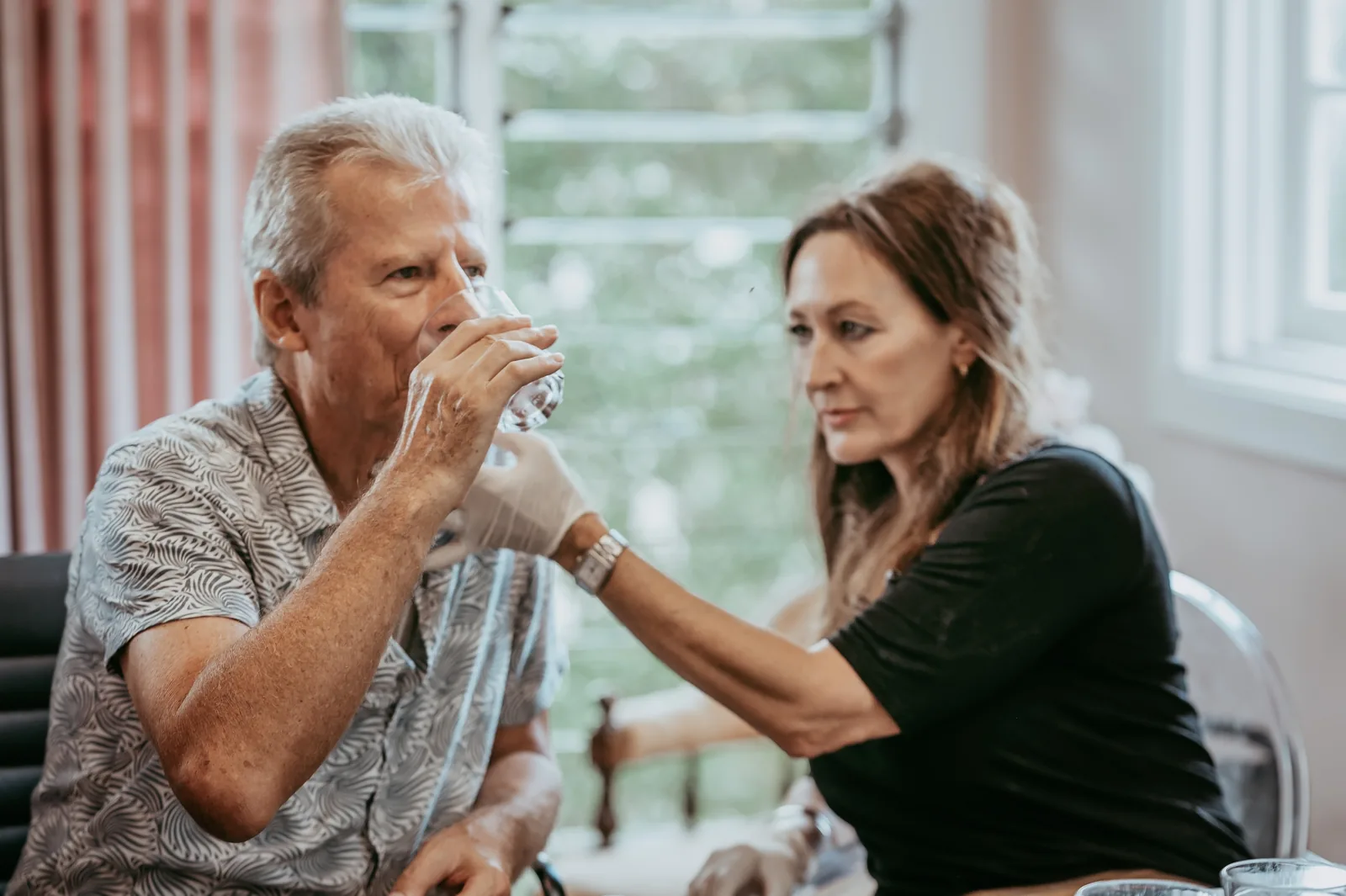
Swallowing (Dysphagia)
Assessment and therapy for adults experiencing swallowing difficulties, supporting safe, comfortable, and enjoyable eating and drinking.
More than one million Australians live with swallowing difficulties. Dysphagia can occur as a result of stroke, Parkinson’s, neurological conditions, ageing, or other medical factors — and if left unmanaged, it can lead to aspiration pneumonia, malnutrition, and withdrawal from shared mealtimes.
Early assessment makes a real difference. My approach is practical, evidence-based, and tailored to each individual’s needs — so eating and drinking can be safer, more comfortable, and more enjoyable.
Common Signs of Swallowing Difficulty
Assessment and Therapy
What to Expect from a Swallowing Assessment
A clinical swallowing assessment is non-invasive and comfortable — there are no tubes, needles, or cameras involved. You simply eat and drink while I observe carefully. The assessment typically takes 45–90 minutes and includes:
If a more detailed assessment is needed, I may recommend an instrumental evaluation such as a FEES (a small, flexible camera passed gently through the nose) or a Videofluoroscopy Swallow Study (VFSS) — a moving X-ray of the swallowing process. These assessments are conducted in a hospital or clinical setting and allow clinicians to directly observe what is happening in the back of the mouth and throat during swallowing.
The IDDSI Framework
When I recommend modified food or drink textures, I use the International Dysphagia Diet Standardisation Initiative (IDDSI) framework — a globally agreed system that ensures everyone involved in your care speaks the same language, whether that’s your dietitian, GP, kitchen staff, or family.
IDDSI uses a simple numbered scale: drinks range from Level 0 (thin, like water) to Level 4 (extremely thick), while foods range from Level 3 (liquidised, like smooth yoghurt) to Level 7 (regular). I’ll explain exactly which levels are right for you and what that means in practical, everyday terms.
Residential Aged Care & Community Services
I provide services across a range of settings, including regular visits to Sunshine Coast nursing homes and community environments. I offer:
Ongoing Assessments
Regular visits for communication, voice, and swallowing assessment and rehabilitation within residential aged care.
Staff Training
Dysphagia training for nursing and allied health staff, plus professional education and presentations.
Documentation
Reports, recommendations, and documentation to support funding requirements and continuity of care.
Person-Centred Care
Supporting safety, dignity, and quality of life at mealtimes while helping individuals maintain independence.
Need a swallowing assessment?
Whether you're a client, family member, GP, or aged care provider — I can help.